NIH-funded BEACONS embeds whole genome sequencing into state newborn screening systems
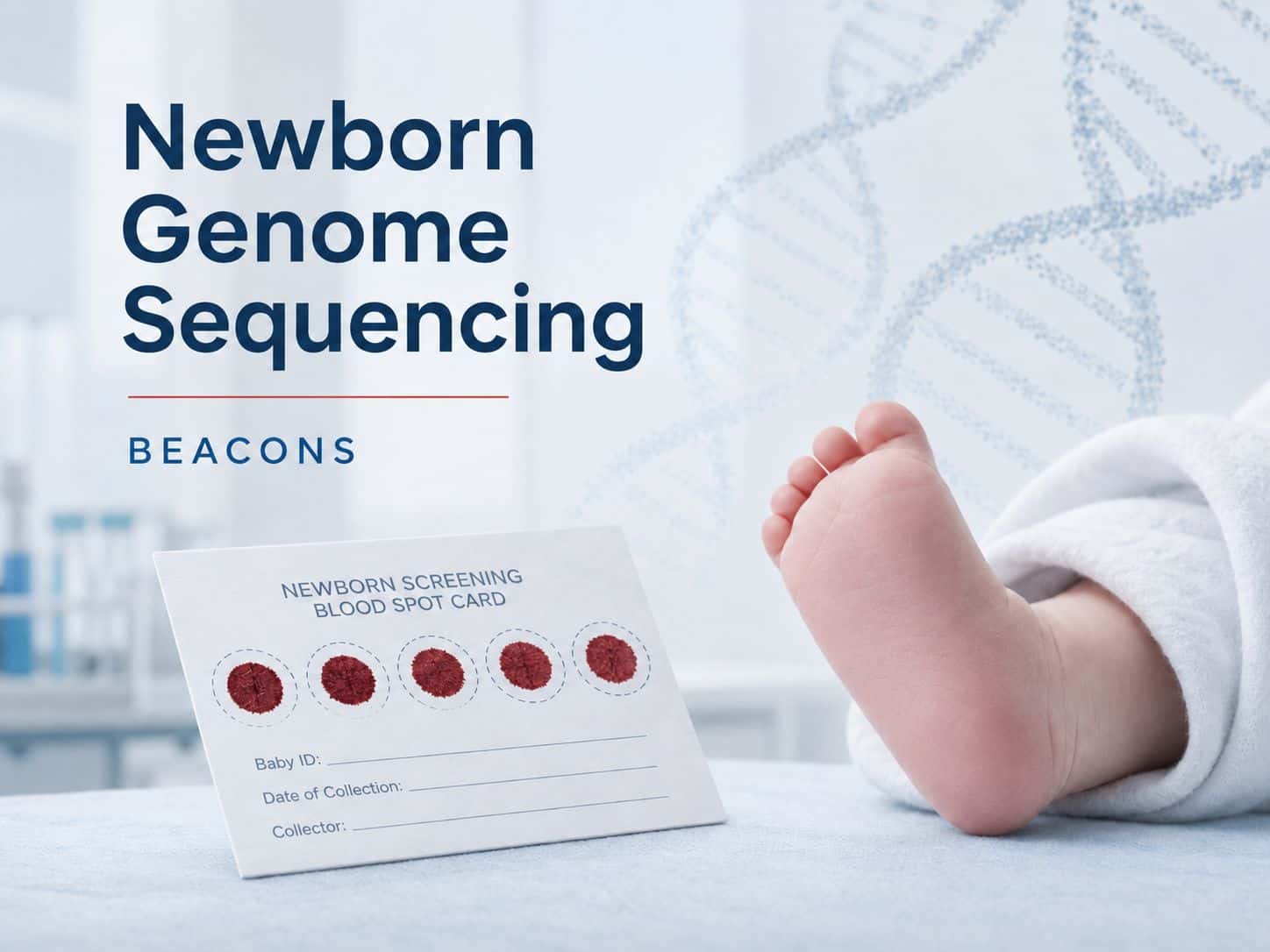
ST. PAUL, Minn. — Citizens’ Council for Health Freedom (CCHF) is warning parents that the NIH-funded BEACONS project will use newborn blood spots collected at birth to sequence newborn genomes through state newborn screening systems.
Building Evidence and Collaboration for GenOmics in Nationwide Newborn Screening (BEACONS), launched October 1, 2025. The project will seek to enroll up to 30,000 newborns in as many as 10 states over three years, with the potential to expand beyond the initial 30,000 newborns.
Recruitment began in April. The first phase includes Iowa, Minnesota, New York, Oregon, Puerto Rico, South Carolina and Texas. BEACONS has finalized a list of 746 genes associated with 777 conditions considered actionable in the first year of life.
“CCHF has warned for years that state health departments are storing, using and sharing Baby DNA without real consent,” said Twila Brase, RN, PHN, co-founder and president of CCHF. “BEACONS is the next escalation. This project would sequence a baby’s entire genome before the child ever has a chance to say no.”
CCHF created ItsMyDNA.org to warn parents that newborn dried blood spots contain a child’s DNA and that some states make these blood spots available for research without parental consent. CCHF also orchestrated the first parent lawsuit in the nation against state government storage, use and dissemination of “Baby DNA” without parental consent, Bearder et al. v. State of Minnesota, Court File No. 27-CV-09-5615. The case resulted in a 2011 Minnesota Supreme Court ruling requiring written informed consent before the Minnesota Department of Health could store, use or disseminate newborn blood spots after newborn screening was complete. The plaintiffs were represented by Farrish Johnson Law Office, Chtd., 1907 Excel Drive, Mankato, MN 56001; (507) 625-2525; farrish@farrishlaw.com.
BEACONS uses the newborn blood spot already collected by state public health laboratories. Once routine newborn screening is complete, BEACONS will take eight additional 3.2 mm punches from the original newborn screening card for sequencing.
CCHF warns that parents could be approached shortly before or after birth, a vulnerable time, and asked to authorize whole genome sequencing without fully understanding the consequences for their child.
“Whole genome sequencing does not uncover one simple test result,” Brase said. “It creates information about the child’s body, family, disease risks and future. Parents need to know where the results will be recorded, who will have access, how long the data will exist and whether this information could be used against the child later.”
BEACONS has not finalized its DNA and data policy. BEACONS is also working with states to determine how clinical results will be reported, including whether results become part of the state newborn screening record.
A 2010 UCLA study published in the Journal of Health and Social Behavior on expanded newborn screening described some families as the “collateral damage of newborn screening” after abnormal results left parents uncertain whether their children were false positives or true positives.
“Government cannot be in the business of sequencing the genomes of citizens,” Brase said. “Genome sequencing should never be done without the consent of the subject. A newborn cannot consent.”
Media inquiries and interview requests for Twila Brase should be directed to Alexandra de Scheel at media@cchfreedom.org.
# # #
About Citizens’ Council for Health Freedom:
Since 1998, CCHF has existed to protect patient and doctor freedom. As a national, independent, non-partisan, non-profit health freedom organization, CCHF maintains a patient-centered, privacy-focused, free-market perspective. For more information, visit: www.cchfreedom.org.